Cataract is one of the most common causes of vision changes, particularly as people grow older. A cloudy natural lens can gradually make everyday activities such as reading, driving, recognizing faces, or watching television more difficult. Fortunately, modern cataract care has evolved significantly, with advanced technologies helping ophthalmologists plan and perform procedures with greater precision.
For patients researching robotic cataract surgery in Rajendra Nagar, it is important to understand what the technology involves, how cataract surgery works, and why a detailed eye evaluation remains an essential part of treatment planning.
What Is Cataract Surgery?
A cataract develops when the natural lens of the eye becomes cloudy. This prevents light from passing clearly through the eye and can result in blurred or hazy vision.
During cataract surgery, the cloudy natural lens is removed and replaced with an artificial intraocular lens, commonly called an IOL. The selected IOL can be discussed with the ophthalmologist according to the patient’s visual requirements, eye measurements, and lifestyle.
Modern cataract procedures are generally designed to use small incisions and support a controlled recovery.
Understanding Robotic and Technology-Assisted Cataract Procedures
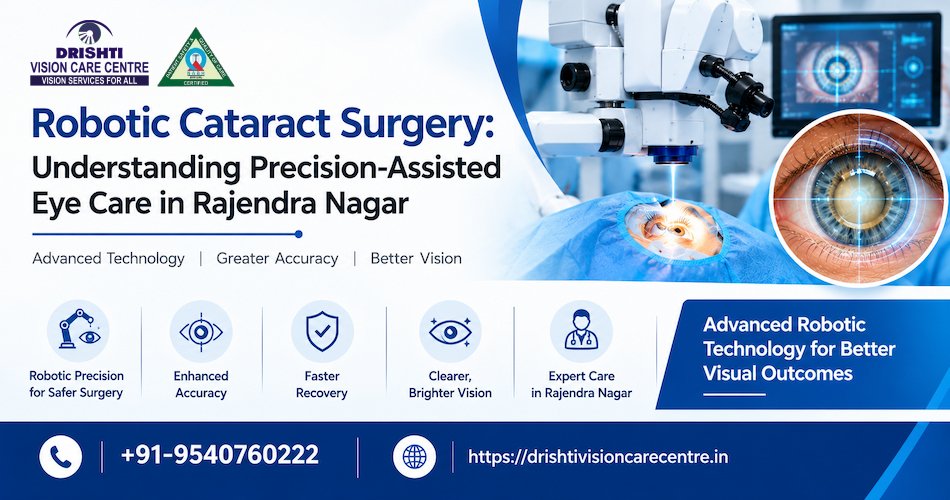
The term “robotic cataract surgery” is sometimes used to describe highly technology-assisted cataract procedures. Unlike a fully autonomous robotic operation, modern cataract surgery remains under the control of a trained ophthalmic surgeon.
Advanced systems can assist with planning, measurements, incision positioning, lens fragmentation, and other aspects of the procedure, depending on the technology being used.
The purpose of these technologies is to support surgical precision and help the surgeon work according to the patient’s individual eye measurements.
Why Accurate Eye Measurements Matter
Before cataract surgery, detailed measurements are required to understand the shape and optical characteristics of the eye. These measurements help the ophthalmologist determine the appropriate surgical plan and IOL selection.
Preoperative assessment may evaluate:
- Corneal curvature
- Eye length
- Anterior chamber characteristics
- Existing refractive error
- Retinal health
- Corneal condition
- Overall ocular health
Accurate measurements are particularly important when discussing the patient’s desired visual outcome after surgery.
Benefits of Technology-Assisted Cataract Care
Advanced cataract technology can support several aspects of treatment planning and surgical execution. Depending on the patient’s condition and the equipment available, technology-assisted procedures may offer:
- Detailed surgical planning
- Precise eye measurements
- Computer-assisted guidance
- Customized treatment parameters
- Consistent surgical steps
- Better visualization of important eye structures
However, technology is only one part of successful cataract care. The surgeon’s clinical judgment, patient evaluation, and postoperative monitoring remain equally important.
Who May Be a Candidate?
Cataract surgery is generally considered when the cloudy lens begins interfering significantly with a person’s daily activities or quality of life.
Potential symptoms include:
- Blurred or hazy vision
- Difficulty seeing in low light
- Increased sensitivity to glare
- Halos around lights
- Faded or less vibrant colors
- Frequent changes in spectacle prescription
- Difficulty reading or driving
Not every person with a cataract needs immediate surgery. An ophthalmologist can evaluate the severity of the cataract and discuss whether treatment is appropriate.
Choosing the Right IOL
The intraocular lens is an important part of cataract surgery. Different lens options may be available depending on the patient’s eye condition and visual goals.
The ophthalmologist may discuss options such as monofocal, multifocal, extended-depth-of-focus, or toric lenses when clinically appropriate.
The choice should be based on factors such as:
- Eye measurements
- Corneal health
- Astigmatism
- Retinal condition
- Lifestyle
- Reading requirements
- Distance vision expectations
There is no single lens that is ideal for every patient, making personalized consultation important.
What Happens Before Surgery?
A comprehensive preoperative evaluation helps the ophthalmologist understand the condition of the eye and identify factors that could influence treatment.
The assessment may include vision testing, slit-lamp examination, dilated retinal evaluation, eye pressure measurement, biometric measurements, and other imaging when required.
Patients should also provide information about existing medications, previous eye procedures, allergies, and relevant medical history.
This information helps the clinical team prepare an appropriate treatment plan.
Recovery After Cataract Surgery
Recovery varies between individuals and depends on the surgical technique, eye health, and other factors. Some patients notice improved vision relatively soon, while complete visual stabilization may take longer.
Postoperative care commonly involves prescribed eye drops and scheduled follow-up examinations. Patients should follow their ophthalmologist’s instructions regarding exercise, eye protection, hygiene, and other activities during the recovery period.
Sudden vision loss, significant pain, increasing redness, or other unexpected symptoms should be reported promptly.
Finding the Best Robotic Cataract Surgery in Rajendra Nagar
People searching for the best robotic cataract surgery in Rajendra Nagar should look beyond the technology name alone. Cataract treatment involves several important stages, including diagnosis, biometric measurements, IOL selection, surgical planning, the procedure itself, and postoperative care. Looking for the best eye hospital in Rajendra Nagar Ghaziabad? Visit Drishti Vision Care Centre for advanced robotic cataract surgery and complete eye treatment with expert specialists.
When comparing eye care providers, patients may consider:
- Ophthalmologist qualifications and experience
- Diagnostic equipment
- Cataract surgery technology
- Range of IOL options
- Preoperative assessment
- Follow-up arrangements
- Transparency about treatment options
A detailed consultation can help patients understand which technology and surgical approach are appropriate for their individual eyes.
What Makes a Good Eye Clinic?
Choosing a Best eye clinic in Rajendra Nagar involves considering the complete patient-care process rather than focusing on one procedure.
A comprehensive eye clinic should be able to evaluate common eye conditions, conduct appropriate diagnostic examinations, explain treatment alternatives, and provide follow-up care.
For cataract patients, access to appropriate diagnostic technology and experienced ophthalmic care can make the treatment journey more organized and personalized.
Cataract Care at Drishti Vision Care Centre in Rajendra Nagar
Drishti Vision Care Centre focuses on comprehensive ophthalmic evaluation and individualized cataract care. Patients can undergo detailed assessment to determine the condition of the natural lens and understand the treatment options suitable for their visual requirements.
When advanced technology is appropriate, it can be incorporated into the cataract treatment pathway according to the patient’s eye measurements and clinical needs. The emphasis remains on careful diagnosis, appropriate surgical planning, and postoperative monitoring.
Patients considering robotic cataract surgery in Rajendra Nagar can discuss their visual concerns and expectations during a professional consultation before deciding on a treatment approach.
Preparing for a Cataract Consultation
Patients can make their consultation more productive by bringing their previous eye-care records, current spectacle prescription, and details of medications they use.
It is also useful to discuss practical visual needs. Someone who spends most of the day reading may have different priorities from someone who frequently drives at night or works on a computer.
Sharing these expectations allows the ophthalmologist to explain suitable IOL and treatment options more clearly.
Modern cataract treatment combines surgical expertise with advanced diagnostic and technology-assisted systems. These developments can support precise planning and personalized treatment, but the overall outcome also depends on appropriate patient selection, accurate measurements, experienced surgical care, and consistent follow-up.
For individuals researching robotic cataract surgery in Rajendra Nagar, understanding the complete treatment process can help them approach cataract care with realistic expectations. Those comparing the Best robotic cataract surgery in Rajendra Nagar should consider clinical evaluation, technology, IOL options, surgeon expertise, and postoperative care together.
At Drishti Vision Care Centre, cataract evaluation and treatment planning are approached according to each patient’s eye health and visual requirements. A professional examination remains the best starting point for determining whether cataract surgery is appropriate and which approach may suit the individual patient.
Call us +91-9540760222 today to book your CATARACT Surgery consultation and take the first step towards visual freedom.
📍 Rajendra Nagar | Loni | Sahibabad, Ghaziabad