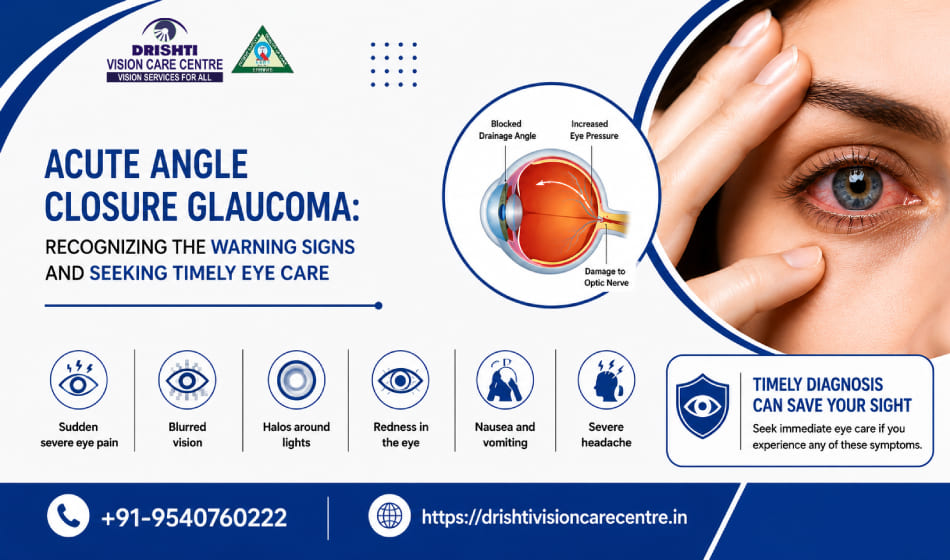
Acute angle closure glaucoma is a serious eye condition that requires immediate medical attention. Unlike some forms of glaucoma that develop gradually without noticeable symptoms, an acute attack can cause sudden eye pain, blurred vision, headaches, nausea, and other alarming symptoms. Because the pressure inside the eye can rise rapidly, delaying treatment may put the optic nerve at risk.
Understanding angle closure glaucoma, its symptoms, causes, and treatment options can help people recognize the condition early. If you experience sudden changes in vision or severe eye discomfort, seeking urgent evaluation from an experienced ophthalmologist is essential. For individuals looking for the Best glaucoma treatment in ghaziabad, a comprehensive eye examination can help identify the condition and determine the most appropriate treatment approach.
Drishti Vision Care Centre focuses on comprehensive eye care and glaucoma evaluation, helping patients understand their eye health and receive appropriate guidance based on their individual condition.
What Is Acute Angle Closure Glaucoma?
Angle closure glaucoma occurs when the drainage angle between the iris and cornea becomes blocked or closes. This prevents the natural fluid inside the eye, known as aqueous humor, from draining properly. As fluid accumulates, intraocular pressure can increase significantly.
In an acute episode, the pressure may rise quickly and cause noticeable symptoms. This makes the condition a medical emergency that should not be ignored.
The optic nerve, which carries visual information from the eye to the brain, can become damaged when elevated eye pressure persists. If treatment is delayed, permanent vision loss may occur.
Why Acute Angle Closure Glaucoma Requires Urgent Attention
The sudden rise in eye pressure associated with an acute attack can affect vision within a short period. Unlike chronic forms of glaucoma, where damage may progress slowly, an acute episode can develop rapidly.
Patients may experience:
- Severe eye pain
- Sudden blurred vision
- Redness of the eye
- Headache around the affected eye
- Halos around lights
- Nausea or vomiting
- Increased sensitivity to light
- A feeling of pressure inside the eye
Not every patient experiences every symptom. However, sudden severe eye pain combined with vision changes should always be treated as an emergency.
What Causes an Angle Closure Attack?
The drainage angle may become blocked when the iris moves forward and obstructs the pathway through which fluid normally exits the eye.
Certain anatomical features can increase the risk. People with naturally narrow drainage angles may be more susceptible, particularly as changes in the eye occur with age.
Other factors that may contribute to an attack include:
- Certain medications
- Pupil dilation in susceptible individuals
- Anatomical characteristics of the eye
- Increasing age
- Family history of glaucoma
- Hyperopia or farsightedness
A detailed eye examination can help identify individuals who have narrow angles before an acute episode occurs.
Who Is at Higher Risk?
While acute angle closure glaucoma can affect different individuals, some people have a higher risk because of their eye anatomy or other factors.
People who may require closer monitoring include those with:
- A family history of glaucoma
- Narrow drainage angles
- Farsightedness
- Increasing age
- Previous episodes of elevated eye pressure
- Certain medication-related risks
Regular ophthalmic examinations are particularly important for individuals who may have anatomical risk factors. Early detection of narrow angles may allow preventive measures to be considered before an emergency develops.
How Is Acute Angle Closure Glaucoma Diagnosed?
A comprehensive eye examination is essential for diagnosing glaucoma and determining the type involved.
An ophthalmologist may perform several tests, including:
Tonometry
This measures the pressure inside the eye and helps identify elevated intraocular pressure.
Gonioscopy
Gonioscopy allows the doctor to examine the drainage angle and determine whether it is open or narrow.
Optic Nerve Examination
The optic nerve is examined for signs of damage associated with glaucoma.
Visual Field Testing
This evaluates peripheral and central vision and may help identify functional changes caused by optic nerve damage.
Additional Imaging
Advanced imaging technologies can provide detailed information about the optic nerve and retinal structures, supporting diagnosis and monitoring.
Early and accurate diagnosis is important for developing an appropriate treatment strategy.
How Is an Acute Glaucoma Attack Treated?
An acute episode requires immediate medical management. The primary goal is to lower the eye pressure as quickly and safely as possible while addressing the underlying blockage.
Depending on the patient’s condition, treatment may involve:
- Pressure-lowering eye drops
- Oral or intravenous medications
- Medicines that help reduce fluid production or improve drainage
- Laser treatment to create an alternative pathway for fluid movement
The specific treatment depends on the severity of the attack and the patient’s overall eye health.
Patients should never self-medicate for sudden eye pain or blurred vision. Immediate professional evaluation is essential.
The Role of Laser Iridotomy in Angle Closure Glaucoma
Laser peripheral iridotomy is a commonly used procedure for certain forms of angle closure glaucoma. During the procedure, a small opening is created in the peripheral iris using a laser.
This opening helps improve the movement of aqueous fluid within the eye and may reduce the risk of future angle closure episodes in appropriate patients.
The procedure is generally performed on an outpatient basis, although the exact treatment plan depends on the patient’s individual condition.
In some cases, the ophthalmologist may also evaluate the other eye because similar anatomical risk factors can exist bilaterally.
Why Early Diagnosis Can Make a Difference
Glaucoma is often called a “silent thief of sight” because many forms can progress without obvious symptoms. However, acute angle closure glaucoma can present with dramatic warning signs.
Recognizing these symptoms and seeking immediate care can help reduce the risk of permanent optic nerve damage.
People who are searching for the Best glaucoma treatment in ghaziabad should consider the importance of early diagnosis, advanced diagnostic testing, and individualized treatment planning rather than focusing only on a particular procedure.
The right treatment depends on the type and severity of glaucoma, the condition of the optic nerve, and the patient’s overall eye health.
Comprehensive Glaucoma Care at Drishti Vision Care Centre
Choosing an eye care centre with a comprehensive approach can be valuable for patients managing glaucoma or those at risk of developing the disease.
Drishti Vision Care Centre provides eye care services focused on detailed evaluation, diagnosis, and personalized treatment guidance. Patients can undergo appropriate assessments to understand their eye pressure, optic nerve health, and potential risk factors.
A patient-centered approach may include:
- Detailed glaucoma evaluation
- Intraocular pressure assessment
- Optic nerve examination
- Visual field assessment
- Angle evaluation when required
- Personalized treatment planning
- Ongoing monitoring and follow-up
Regular follow-up is especially important because glaucoma management is often a long-term process.
Can Acute Angle Closure Glaucoma Be Prevented?
Not every episode can be prevented, but identifying individuals with narrow angles can help doctors assess the risk before symptoms occur.
Routine eye examinations can be particularly valuable for people with risk factors. Depending on the findings, an ophthalmologist may recommend observation, preventive laser treatment, or other appropriate measures.
Patients should also inform their doctors about any history of glaucoma before starting certain medications, as some drugs may affect susceptible individuals.
When Should You Seek Emergency Eye Care?
Sudden severe eye pain accompanied by blurred vision, halos around lights, redness, headache, nausea, or vomiting should never be ignored.
These symptoms may indicate an acute attack requiring immediate medical attention. Delaying evaluation can increase the risk of optic nerve damage and permanent vision loss.
If you notice sudden changes in your vision, contact an eye care professional or seek emergency medical attention without delay.
Acute angle closure glaucoma is a serious eye condition that requires rapid diagnosis and treatment. Understanding the symptoms of angle closure glaucoma can help individuals recognize potential warning signs and seek timely medical attention.
While treatment varies from patient to patient, early evaluation, accurate diagnosis, and appropriate pressure management are essential components of glaucoma care. Individuals searching for the Best glaucoma treatment in ghaziabad should prioritize comprehensive evaluation and individualized medical guidance from qualified eye care professionals.
With a focus on detailed diagnosis and personalized treatment planning, Drishti Vision Care Centre helps patients understand their eye health and take informed steps toward protecting their vision. Regular eye examinations remain one of the most valuable ways to identify glaucoma-related risks before significant vision loss occurs.
At Drishti Vision Care Centre, the Best Eye Hospital in Ghaziabad, we are committed to offering the best angle closure glaucoma treatment in Ghaziabad, supported by advanced technology, expert ophthalmologists, and personalized care.
📞 Call us today: +91- 9540760222
📍 Visit us at: Rajendra Nagar | Sahibabad | Ghaziabad